


In a survey sponsored by Care Net, a nonprofit organization supporting more than 1,100 pregnancy centers across North America, researchers found that women with unexpected pregnancies go silently from the church pew to the abortion clinic. According to the survey results, women expressed concern that the church would not provide help.
4 in 10 women who have had an abortion were going to church when they ended their pregnancy.
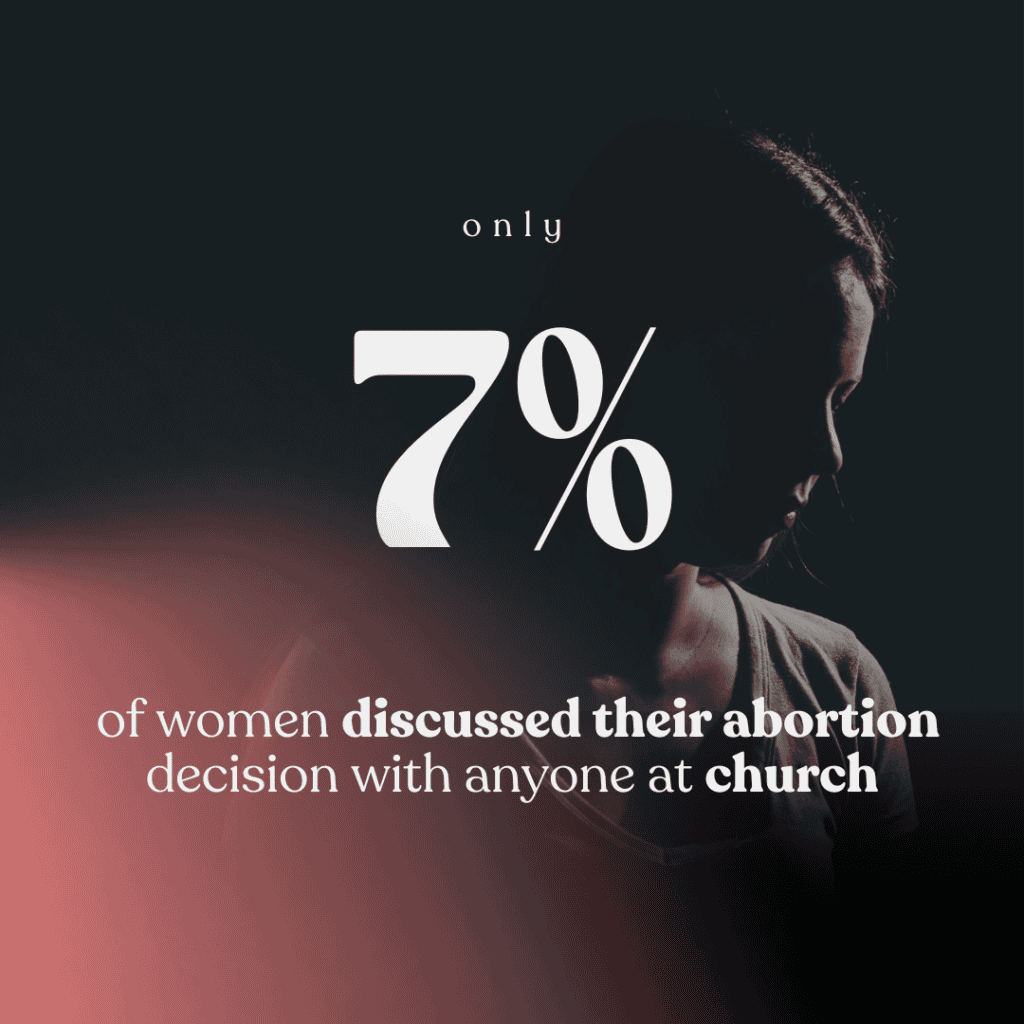
“That’s a huge opportunity for the church to have an impact on those decisions,” said Scott McConnell, Executive Director of Lifeway Research. Yet only 7 percent of women discussed their abortion decision with anyone at church. Three-fourths (76 percent) say the church had no influence on their decision to terminate a pregnancy.
The results point to a church culture that often lacks grace, McConnell said.
Among women who have had an abortion:
- Two-thirds (65 percent) say church members judge single women who are pregnant.
- A majority (54 percent) think churches oversimplify decisions about pregnancy options.
- Fewer than half (41 percent) believe churches are prepared to help with decisions about unwanted pregnancies.
- Only 3 in 10 think churches give accurate advice about pregnancy options.
“If [women] don’t start experiencing something different than what they’ve seen in the past,” McConnell said, “these numbers aren’t going to change.”
Christian Connections
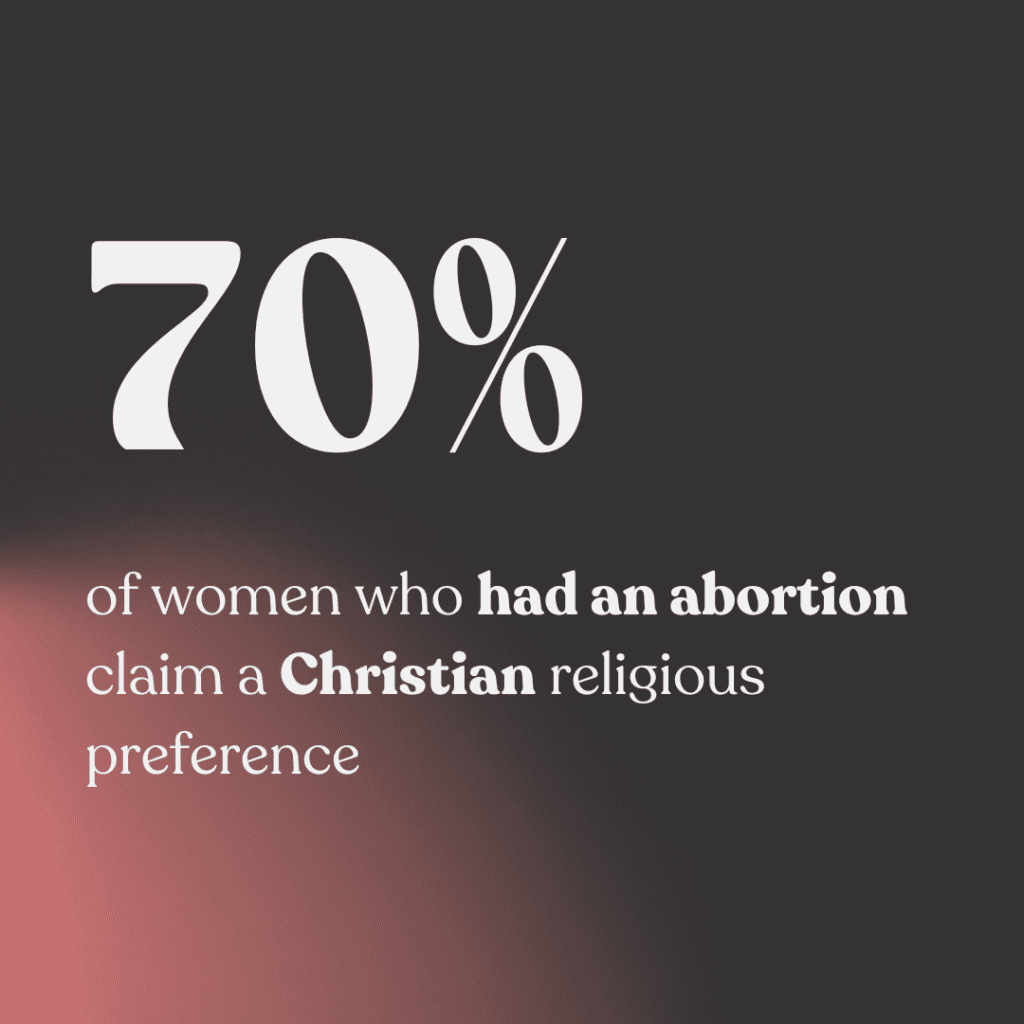
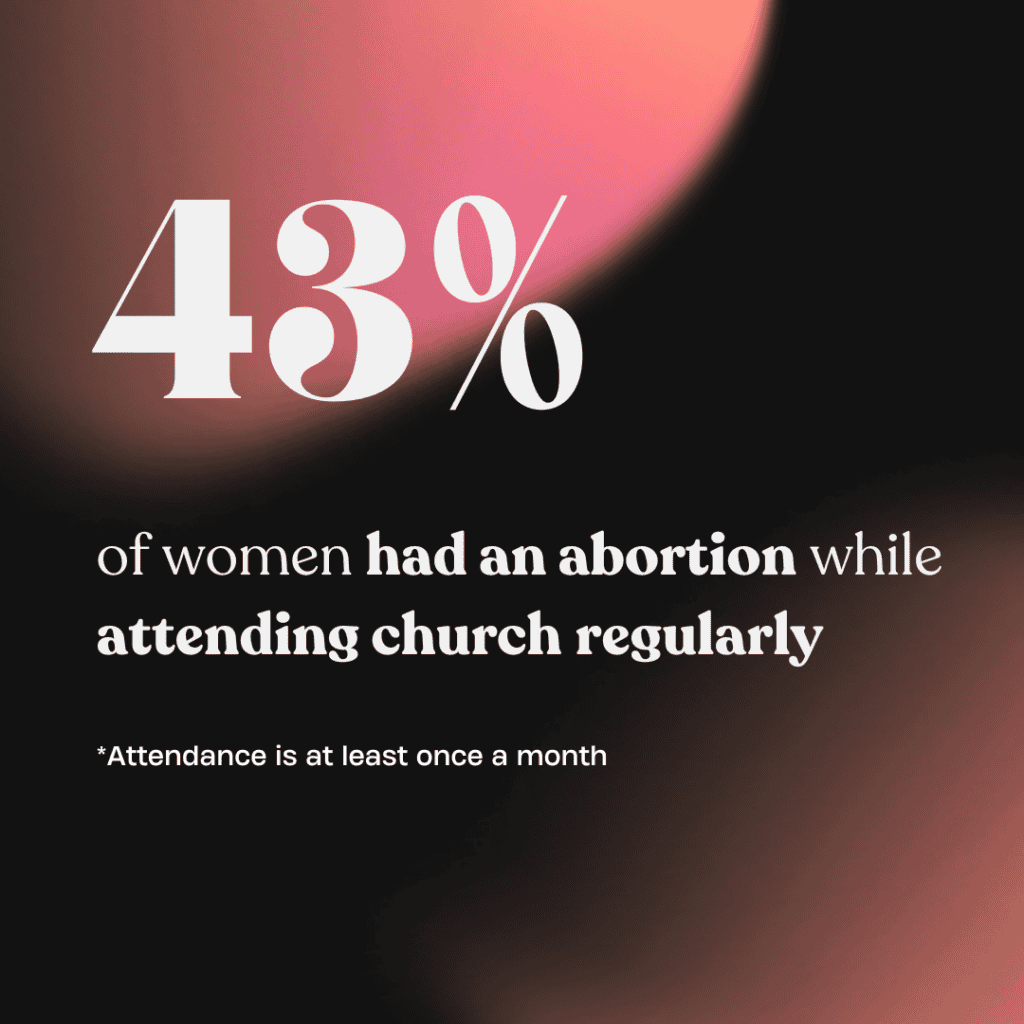
The church has connections with many women who choose abortion, Care Net research found. In the survey of 1,038 women who have had abortions, 70 percent claim a Christian religious preference, and 43 percent report attending church monthly or more at the time of the abortion.
Unfortunately, distrust of the church’s response is widespread, the survey shows.
When weighing an abortion decision, women say they expected or experienced judgment (33 percent) or condemnation (26 percent) from a church far more than caring (16 percent) or helpfulness (14 percent).
The Abortion Clinic and the Church
Only 38 percent of women who have had an abortion consider church a safe place to discuss pregnancy options including parenting, abortion and adoption. And while 25 percent say they would recommend a friend or family member discuss an unplanned pregnancy with someone at church, more than twice as many (54 percent) say they would not recommend it.
“While much work needs to be done to equip the church to help women and men with their pregnancy decisions, there are positive signs that many churches will be receptive to efforts to implement programming that addresses this need,” said Roland C. Warren, president and CEO of Care Net.
The survey shows that frequent churchgoers – people who know the church best – were significantly more likely to believe the church is prepared to provide loving, compassionate support for those considering abortion, especially those attending evangelical churches.”
How churches respond is key, McConnell said.
“For most women with an unwanted pregnancy,” McConnell said, “if nobody is willing to say, ‘We’re going to help you through this,’ it’s hard for them to rationally say they should keep the child.”
How to serve the post-abortive
Generally speaking, the Christian community is very vocal about pro-life beliefs and efforts. It’s incredibly beautiful to see the Pro-Life movement come together across denominational lines to educate, inform, and activate the body on a national and local level. Yet, sometimes in our passionate conversations and in efforts to save the preborn, we can also alienate members of our movement. Many times, the post-abortive are neglected, even in our home church.
Hurting the hurting
Jessica Russo, Donor Relationship Manager at Embrace Grace, was recently at a gathering of pro-life Christians, where an attendee of the meeting was moved to tears when asking how anyone could abort their child. This woman has a beautiful testimony of adoption and feels blessed to be adopted. Because of her life experiences, she is challenged to understand the desperation of an abortion decision. At the moment, without ill intent, another woman responded, “they are just selfish.”
While this response is somewhat accurate because most abortions are a decision made out of self-preservation, the way it was delivered felt harsh. Her words cut deep. Jessica’s heart instantly grieved at the thought of a post-abortive man or woman hearing those words and how they would validate their thoughts and feelings of being unworthy, dirty, and broken. She later apologized for her choice of words.
As Jessica left that meeting, she was thankful that God allowed that moment to happen; He allowed her to see how easily we can discourage the post-abortive from opening up and sharing their story. Unfortunately, the idea that abortion is an “unforgivable sin” has permeated our pews, invaded our values, and tarnished our relationships.
But the only difference between her sin and our sin, her’s is visible. But that doesn’t make it any more of a sin.
Nothing is beyond The Lord’s reach. And our words toward women who had an abortion can have a lasting impact. We have the power to build up and support these women, and remind them of the redemptive nature of Christ, just with our words.
How we see the post-abortive
These are the most recent numbers reported by Guttmacher:
- 1 in 4 women will make an abortion decision by age 49
- 54% of these women identify as Christian
- 59% of abortions are obtained by patients who had at least one birth
- 39% of patients were white, 28% black, 25% Hispanic, and 9% other races & ethnicities
With 1 in 4 women making an abortion decision by the age of 49, the likelihood of us encountering a woman who’s had an abortion is very high. Men and women who’ve had an abortion experience are in our homes, churches, schools, circles of friends, and workplaces.
Shouldn’t we be hearing their stories?
How come we don’t know who they are?
Why do these statistics shock us?
How can we serve those who’ve experienced an abortion in and through our churches if we aren’t able to see them?
They have tucked the guilt, shame, and pain away and put a brave face on, because the fear of rejection is too much to risk. Many of them have been a part of conversations where a blanket statement is made about people who choose abortion, resulting in people locking up and becoming unwilling and unable to share their experience.
Will we lead the broken into the arms of The Redeemer or allow them to remain bound by their abortion experience?
Those with an abortion in their past
Meaningful gifts! It’s exciting to give someone a gift, knowing that you’ve picked out the perfect one for them. It begins with considering the needs of the person and everything going on in their current circumstances. Lastly, the wrapping has to be just as amazing and thoughtful as the gift itself! Shouldn’t we see serving the men and women with abortion pain in a similar way?
Every person is incredibly unique and deserves our intentionally seeing them and ministering to them with God’s love. Here are a few ways that your church community can serve the walking wounded:
- Talk about God’s desire to heal hearts from the pulpit.
- Help people to share their story! We can help others heal; we overcome by the blood of the lamb and the word of our testimony. (Revelation 12:11)
- In our pro-life conversations, be mindful that 54% of women who have experienced abortion identify themselves as Christians. Hurting people in need of support and love are in our churches!
- Refrain from using harsh language and judgment when speaking about those who have experienced abortion; it’s God’s kindness that leads us into repentance. (Romans 2:4)
- Offer abortion healing support groups in your church. A few resources are Surrendering the Secret, Forgiven & Set Free, and Transforming Your Story.
- If you are unable to offer an abortion healing support group at your church, connect with a local pro-life pregnancy center to see if they provide one and partner with them. You can also connect with SupportAfterAbortion.com for real-time confidential resources.
The Church's role in abortion
Many pastors are not aware of the great work pregnancy centers are doing in their community and how their church can help support. Partnering together can have a greater impact on lives saved.
Amy Ford, President of Embrace Grace, shared a conversation she had with a pastor. In which she detailed how Embrace Grace inspires and equips the church to love single and pregnant young women and their families. The pastor asked questions about how the ministry works and where the church would find the pregnant mothers in their communities who need support. That’s where Pregnancy Resource Centers come in.
Many pro-life pastors and even church members do not know what a pregnancy center is or understand what they do. They might have an idea about it but haven’t taken the time to really ask questions and find out.
Church… in case you didn’t know, pregnancy centers are amazing!
They are doing the hard work in your community, serving on the front lines by rescuing, supporting, and encouraging women and their preborn children. They are bringing comfort to them in their greatest time of need, and they are empowering them to be the mothers that God created them to be, whether the moms choose to actively parent, or create an adoption plan.
What are pregnancy centers?
Pregnancy Centers are local, non-profit organizations that provide compassionate support to women and men faced with difficult pregnancy decisions. There are thousands all over the nation that offer free services like pregnancy testing, information about pregnancy options, resources for help in their communities, and post-decision support like parenting education and abortion recovery groups. Many give out free diapers and wipes to mommas in their communities that are in need and have boutiques with gently used baby items that the moms can access as needed. Some pregnancy centers even offer consultations with licensed medical professionals, ultrasounds for pregnancy confirmation and STD testing – all at no cost!
The sonogram machines in pregnancy centers are such a great tool to help save lives. Focus on the Family’s Option Ultrasound program provides grants for sonogram machines to pregnancy centers. Since 2004, over half a million moms have chosen life through the work of their program![1]
There is nothing more emotionally connecting than the sight of the baby kicking and moving on the screen or hearing the baby’s little heartbeat. Many of the sonogram technicians at these pregnancy resource centers say they see the initial panic in a young woman’s eyes turn into tenderness and protectiveness while seeing their baby for the first time through an ultrasound.
If someone were drowning in the ocean, we would call the Coast Guard and pray for the first responders to arrive on the scene quickly. They have the expertise to go into places the average person cannot. The first response team enters immediate danger to save. That is their only goal.
“The pregnancy centers are the first response team and the church is the hospital.” – Tony Evans
Pregnancy Centers are the first responders of help for women with unplanned pregnancies. Women often feel as if they are drowning when finding out they are pregnant, and they can’t breathe. They feel like their world is slipping away from them. Pregnancy centers are a ministry of rescue and comfort, helping the moms catch their breath and get them the support that they need in that moment. They can’t fix all of their problems, but they can point them to the One that does – Jesus. They can help resource them with opportunities of care in their communities – especially to the church.
The Church's role in saving lives
The church is the hospital that a single and pregnant mom needs to encounter and get to know her Savior, be discipled and receive heart healing and transformative care.
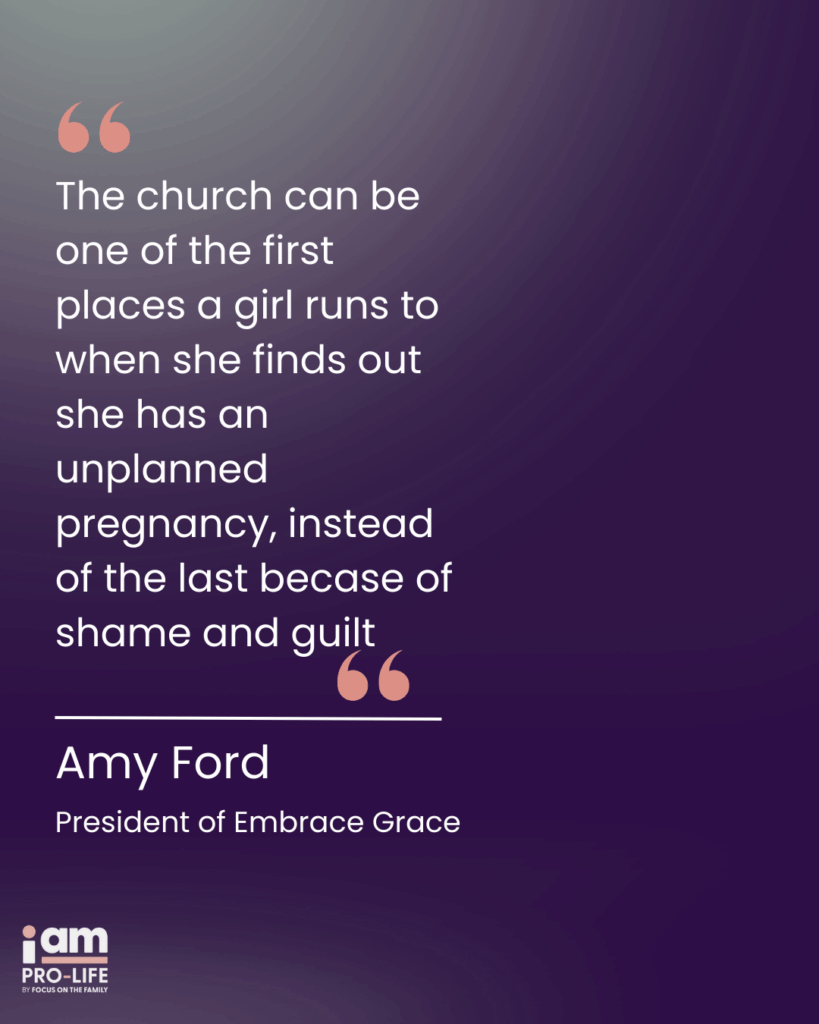
The church can play a powerful role in saving lives. The church can be one of the first places a woman runs to when she finds out she has an unplanned pregnancy, instead of the last because of shame and guilt. The church can help her be brave and choose life – and brave moms raise brave kids! The church can reach out into the communities, and partner with pregnancy centers. They can invite women and men into a spiritual family. The church can heal past hurts and wounds and help set people free because free people free people. The church can help practically by giving single moms a hand-up so they won’t just survive through life but thrive.
We are the church. The church isn’t a building. It’s a people. We are the church everywhere we go and we represent Jesus wherever we are.
Countless women have joined an Embrace Grace group at a local church for support and community. Their stories of how they came to the courageous decision to choose life is inspiring! It’s usually a mix of occasions, conversations and confirmations that God’s got her. Hands down, the number one reason women choose life is that the pregnancy resource centers show the mothers their baby on the ultrasound. Then their hope rises even more when they hear about a local church with an Embrace Grace group that wants to welcome her into their spiritual family. They are opening their doors and hearts to her – and even offering to throw her a baby shower.
With churches and pregnancy centers partnering together, we can save and rescue, comfort and heal hearts because The Great Physician, Jesus, lives in us and works through us.
He leaves the 99 to come after her.
He guides her back home.
He throws her a prodigal party.
He resuscitates her broken heart.
He brings her back to life.
He sets her free.
He empowers the powerless.
He helps her be brave.
He puts the lonely ones into families.
He calls her His beloved daughter.
And then … She Rises.
Church, prayerfully consider partnering more with your local pregnancy centers. Take a tour. Give monthly. Then ask God how you can play a role in helping save lives physically and eternally through the pregnancy centers, the church, or the pro-life movement. When we love single and pregnant moms and are obedient to plant seeds, we can trust God to coordinate the watering and growth. He loves to woo His daughters’ hearts to His.
Sometimes, He will use a church to do it.
Sometimes, He will use strangers.
And sometimes He will use a baby.
Empowered women empower women
One of the best ways to support these women is from empowered women themselves. We can impact culture without being aggressive and argumentative. Simply put: empowered women empower women.
Becoming the type of person who empowers others begins with empowering yourself, and doing so is easier than you think. You don’t need a degree in science, law, or theology to have an impact. After all, there are simple steps that can fortify women with the confidence to choose life.
Step One: Educate Yourself
Invest time in learning about the struggles that abortion-minded women face. Often, women face an abortion decision because they feel helpless, hopeless and isolated with their fears and concerns. Rather than letting yourself be enraged over the loss of life, ask yourself why a woman would consider abortion in the first place.
The answer may not be as simple as you think. Here are some abortion facts, based on Guttmacher Institute’s Reasons U.S. Women Have Abortions:
- Most women say financial burdens are a major factor in why they face an abortion decision.
- Many women cite single motherhood as a reason for seeking out an abortion.
- Abortion-minded women over 30 voice concerns for their own health.
- As stated by Guttmacher, “more than one-third of interview respondents said they had considered adoption and concluded that it was a morally unconscionable option because giving one’s child away is wrong.”
From Guttmacher’s research, we find that the driving forces behind abortion decisions can be alleviated by efforts that empower women. What if single mothers didn’t feel inadequate or alone in their pregnancy journey? Also, would we see a drop in abortion rates if women below the poverty level had access to affordable childcare and mommy-friendly jobs? It’s not unreasonable to assume that the answer is yes.
More Pro-Life Learning Resources:Empty heading
Step Two: Lead With Love
Leading our pro-life efforts with love is a great first step in treating these root causes of abortion. Start by identifying the areas in your life where you can empower women to choose life. For the most part, empowering women to choose life doesn’t have to be a formal effort. We can start making a difference by investing our time and God-given talents. Here are few simple ideas:
- Celebrate preborn life by throwing baby showers.
- Gift a Love Box to a new mom.
- Invite pregnant teens over for a movie night.
- Consider attending parenting or birthing classes with single moms-to-be.
- Offer to cook or clean for new moms.
- Babysit for new parents while they have a spa or date night.
- Know where women with unexpected pregnancies can go for confidential, non-judgemental help. Check out My Choice Network or OptionLine to find pregnancy clinics in your area.
For more ideas on how to create a pro-love culture for women with challenging circumstances, check out How to Join the Pro-Life Movement.
Step Three: Break the Stigmas
Stigmas we’ve allowed to infiltrate our thoughts on unexpected pregnancy have created a culture that ostracizes mothers and children of unplanned pregnancies.
For example, a single mother might face gossip and scrutiny from her church. Well-meaning teachers may instruct their students that pregnancy will make them less desirable to college scouts. And sadly, children conceived from rape are ridiculed and shamed for a crime in which they had no part.
Thankfully, these stigmas can be broken with simple acts of love. Challenge church gossip with scriptures that speak up for those who can’t speak up for themselves. Share stories of brave women like Kourtney Rae and Esther Meeder. These women are among many who chose life, even when the odds were stacked against them.
Step Four: Use Empowering Words to Empower Women
Sticks and stones may break my bones, but words will never hurt me. Hogwash! Words hurt and, according to the Bible, we carry the power to speak life and death.
“Death and life are in the power of the tongue…”
Proverbs 18:21a
How you respond to an unexpected pregnancy can set the tone for how that woman views the life within her. For this reason, be intentional with your words. Speak with love and hope rather than pity or judgment. Likewise, when you find out someone is pregnant, greet her with congratulations! Be active in sending prayers and encouragements her way, and don’t stop after she gives birth. Remind her that she is strong and that, no matter the circumstances of the pregnancy, both she and her child are gifts in your life and the lives of others.
Step Five: Expose Lies That Victimize Women
Sometimes, our well-meaning efforts lead to unintended consequences. Believing lies about abortion and the women who face abortion decisions play a huge role in victimizing women with pregnancy-related challenges.
Here are a few tricky lies that don’t empower women to choose life, as well as the harm that is produced by these lies. But there is an answer, also listed.
Lie #1: “Adoption is an easy solution to abortion!”
Outcome of the Lie: Women receive inadequate care and support after choosing the adoption option.
Truth: Many birth mothers report that even an open adoption can be hard.
Answer: There is strength in making an adoption plan, but there is also inevitable loss. Find out more.
Lie #2: “Women who choose abortion are selfish!”
Outcome of the Lie: For fear of condemnation, abortion-minded women feel too ashamed to ask for help from pro-life friends and family.
Truth: As previously mentioned, abortion statistics say otherwise. Studies show legitimate concerns for both the mother’s and child’s well-being as huge factors in an abortion decision.
Answer: There are options for everyone’s well-being
Lie #3 “Pro-Choicers are heartless, and they are pro-murder!”
Outcome of the Lie: Conversations about the abortion issue revolve around politics rather than helping the mothers in need.
Truth: In reality, reasons for being pro-choice usually come from a place of extreme compassion on women in difficult circumstances.
Answer: Get to the root cause of their pro-choice belief. Don’t stereotype.
Lie #4: “No real Christian would ever consider abortion!”
Outcome of the Lie: Placing ourselves in an all-authoritative position on the abortion issue alienates the women in our churches who have or will face an abortion decision.
Truth: According to Guttmacher, “Many abortion patients reported a religious affiliation—24% were Catholic, 17% were mainline Protestant, 13% were evangelical Protestant.”
Answer: The reality is, we cannot stop in from happening, no matter how hard we try. We are fallen and sin because we are sinful in nature. Therefore, unless we can stop all unexpected pregnancies, we must support and encourage men and women in these situations, not to make things worse. There’s a reason we say “unexpected” pregnancy instead of “unplanned” pregnancy: because God makes no mistakes.
We do make mistakes.
Support, encouragement, and the right choices help men and women choose life, actively parent that life, rather than hide their unexpected pregnancy out of fear and judgment from the church.
Empowered Women Empower Women
One of the most powerful benefits in choosing to combat abortion with women empowerment is the fact that it’s contagious–ask the many women who have been empowered during unexpected pregnancies. Success stories from pro-life support programs like Embrace Grace capture the importance of approaching abortion-minded women with love and compassion.
A higher quality of life, hope for the future, healing for the hurting — these are dreams well worth pursuing. Also, we get the privilege of helping women achieve those goals by empowering those who face an abortion decision. To learn more about how you can get involved in providing women with the support and resources to achieve these dreams, visit our How to Join the Pro-Life Movement page.