


As a part of our weekly Child Advocacy team devotionals, I recently read “The God Who Breathes” by Kurt Dillinger, which opened my eyes to the prevalent reality of global abortion. In the book, Dillinger recalls an experience he had while in Romania on a mission trip where he spoke about God’s forgiveness for abortion. The room broke out as women wept. Surprised by the strong reaction, Dillinger found out that these women were post-abortive and had never heard about the Lord’s forgiveness. The epidemic of abortion has victimized women, men, and preborn children all over the world.
According to the Guttmacher Institute, 73 million abortions happen globally. That equates to 365 million in the last five years, which is more than the current United States population (~340 million). This number is a humbling reminder of the culture of death that exists worldwide. While it would be a futile feat to present the prevalence of abortion in all ~195 countries, I will attempt to present some of the countries in all 6 continents (excluding Antarctica) with the most jarring facts, figures, and cultural phenomena surrounding abortion.
Key Takeaways:
Abortion is a widespread global reality, with tens of millions occurring each year across continents, revealing deep cultural, legal, and economic factors that shape attitudes toward the preborn.
Legal permissiveness does not equal safety or protection for women, as high complication rates, coercion, stigma, and lack of healthcare and support persist even in countries with broad abortion access.
Women and children deserve compassionate, life-affirming support, and many nations reveal the need for resources, cultural change, and advocacy that protect both mother and child rather than treating preborn life as expendable.
Abortion Around The World: North America
1. United States
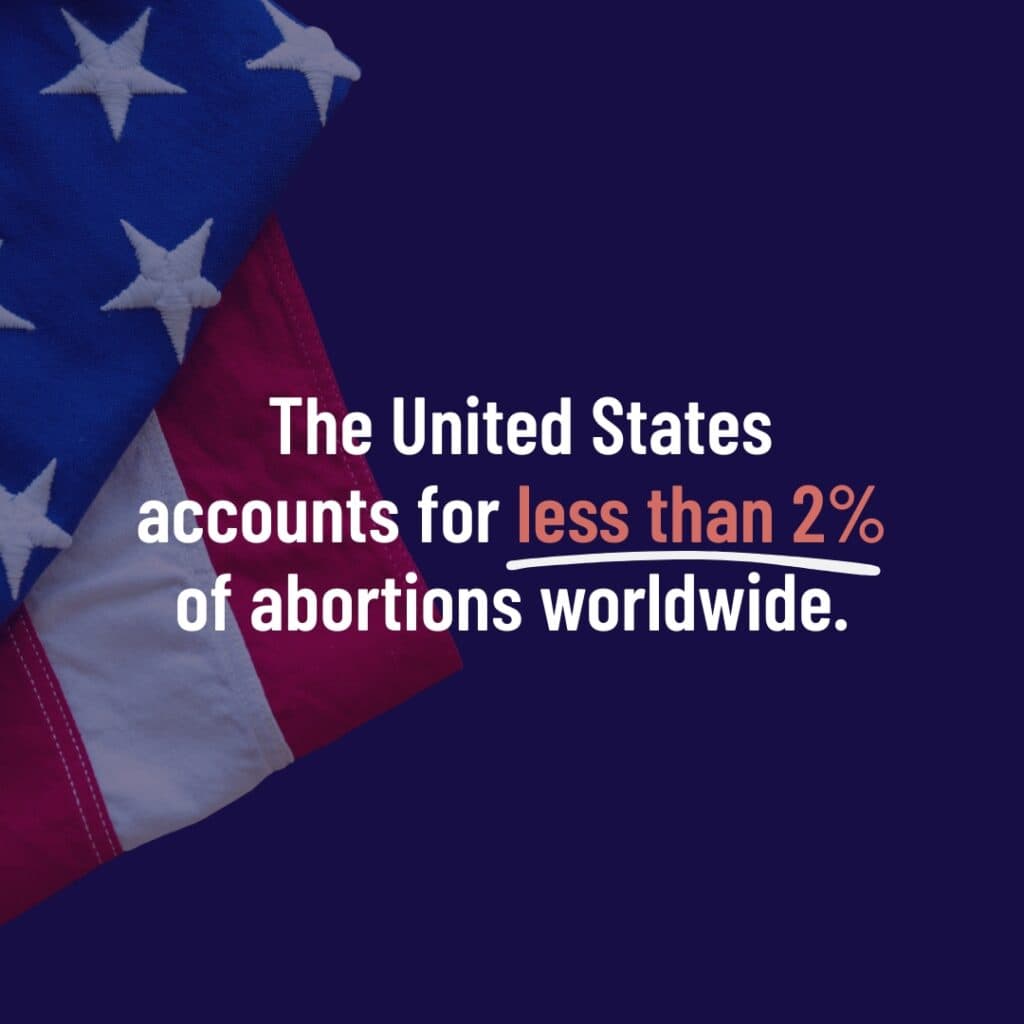
The U.S. accounts for less than 2% of abortions worldwide, according to the World Health Organization. However, the United States is among the least protective countries in the world when it comes to safeguarding preborn children. While abortion laws have changed dramatically since the Dobbs vs. Jackson decision that gave legal power for abortion back to the states, the U.S. is still one of eight countries that has no federal gestational limit for abortion, in addition to Australia, Canada, China, Guinea-Bissau, Mexico, South Korea, and Vietnam. This means that in 9 states and the District of Columbia, abortion is available at or after 21 weeks. Some clinics advertise that abortion is available throughout the entire pregnancy for any reason at all.
It’s also worth noting that while the Unites States would qualify as a country with “safe” abortion access, aka done by a medical professional, abortion-related illnesses and deaths still occur. It is difficult to obtain an exact number of just how many abortion complications there are in the U.S. as there is no nationwide requirement to record or report such causalities. Regardless of this federal oversight, we do occasionally hear stories of women harmed by so-called “safe” abortions, such as 18-year-old Alexis Arguello, who suffered complications after a 22-week abortion at a Planned Parenthood in Colorado and died.
Thankfully, the amazing work of pregnancy centers provides women in the U.S. with life-affirming options by providing resources and support for little to no cost. Additionally, adoption in the U.S. is another heroic option available for mothers in unexpected pregnancies who feel ill-equipped to parent. We are incredibly blessed in the U.S. with resources for families in difficult situations, whereas other nations do not have the same safety net.
Additional Resources:
- See Life – A Focus on the Family Ministry that provides a way for churches, medical professionals, and businesses to connect with their local pregnancy centers to support lifesaving services.
- Option Ultrasound – A Focus on the Family Ministry that provides various grants that help fund pregnancy centers across America.
2. Canada
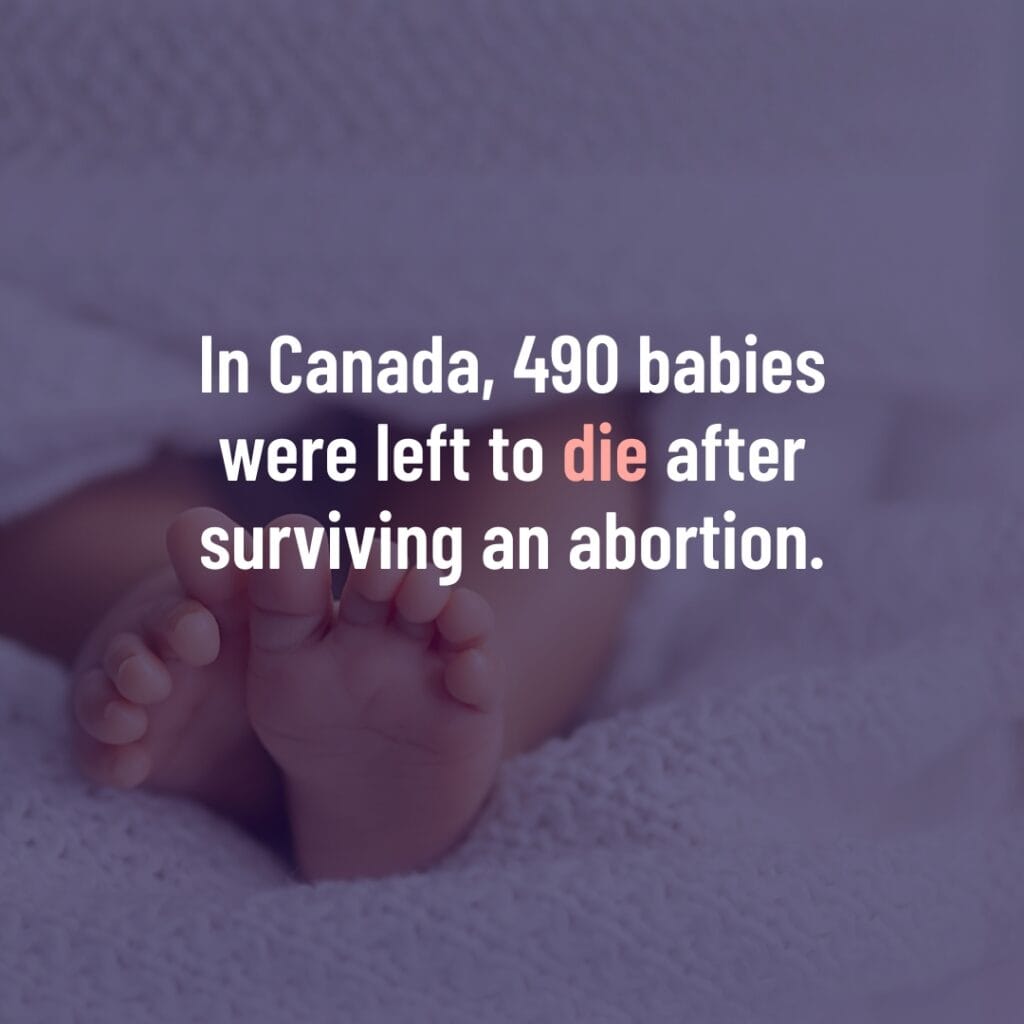
Canada is another one of seven countries that has no federal gestational limit for abortion. In Canada’s own legal code, preborn children do not have personhood, stating “a child becomes a human being within the meaning of this Act when it has completely proceeded, in a living state, from the body of its mother.” On top of that, Canada currently has no federal law that requires medical professionals to provide care for children who are born alive after attempted abortion. Because of this, nearly 490 babies were born alive after failed abortions and left to die between the years 2000 and 2009. This is not healthcare; this is infanticide.
3. Greenland
Greenland has the highest rate of abortion globally. In 2018, Greenland recorded 66 abortions per 1,000 women of childbearing age, nearly five times the U.S. rate and six times Denmark’s. While Greenland has regulations that largely do not allow for elective abortion the end of the 12th pregnancy week, these numbers are still jarring and highly concerning. The reason for this high abortion rate is varying, one of which being the access to free abortions provided by the Greenland government. Additionally, fertility and reproductive care in Greenland is hindered by scarce services in remote areas and frequent medical staff turnover. Pregnant women from small towns and settlements must travel to one of five centralized hospitals to give birth, often being separated from their families for weeks beforehand.
One study found that both Nuuk and Paamiut women cited their young age, not using contraception, and lack of education as reasons why Greenlanders choose abortion. Some even cited pressure from healthcare workers to select abortion, stress from other children, or substandard housing. Regardless of which reason contributes the most to Greenland’s shocking abortion rate, Greenlanders deserve better than abortion, and a government that protects and provides for both women and their preborn children.
4. Mexico
In 2023, Mexico’s Supreme Court decriminalized abortion federally and did not create a national gestational limit, making Mexico another one of eight countries that has no federal gestational limit on abortion. Interestingly enough, a 2019 poll found that over 70% of people in Zacatecas, Chiapas, and Tamaulipas opposed women’s “right” to abortion, whereas around 53% of residents in Mexico City and Baja California supported it. Based on this, it’s not shocking that the highest number of abortions in Mexico occurred in Mexico City, superseding 189,000 legal abortions in 2024.
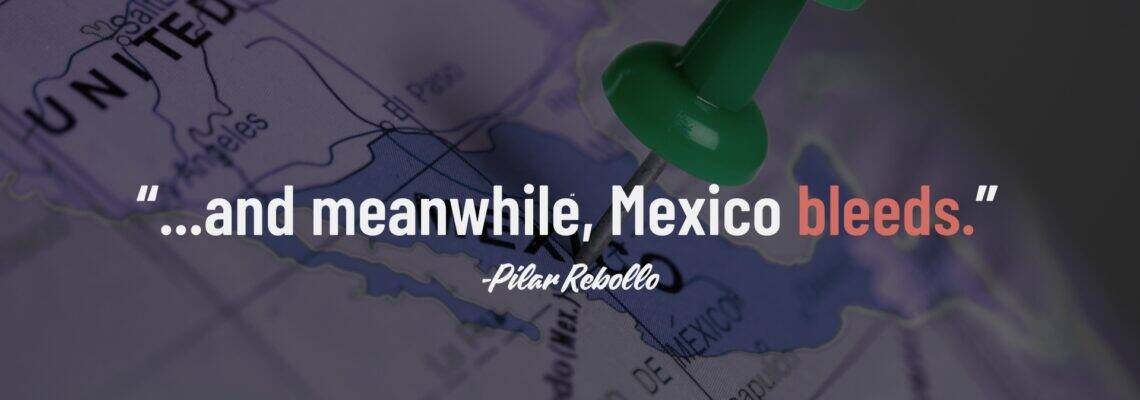
Despite the lack of federal regulation on abortion, Mexico does have a strong pro-life presence. On May 16, 2025, thousands of people participated in the March for Life in Mexico City. Organized by the Pasos por la Vida (Steps for Life), Pilar Rebollo, a leader for Steps for Life, gave a heartwarming speech that should be echoed globally:
“[Decriminalization has inflicted] a great many wounds, revictimized pregnant women, and deprived Mexico of an entire generation.” She criticized, “The imposition of an agenda that turns death into a right and marginalizes the [child in the womb] because he doesn’t produce anything, profiting from the most vulnerable. And meanwhile, Mexico bleeds. Today, we remember the missing generation and embrace every mother who has suffered in silence. But we also proclaim with hope that every heart that beats is a promise, and every step taken today can change history.”
Abortion Around the World: Africa
It is important to clarify the myth that comes with the term “unsafe abortion.” Many pro-choice sources advocate for legalizing abortion in developing nations by claiming that they are “unsafe.” While any procedure performed in unsanitary conditions is dangerous, it is misguiding to claim that there is such a thing as a “safe” abortion as the goal of the procedure is always to end the life of another human being. Additionally, the terms “safe” and “unsafe” abortion are misleading as the World Health Organization defines safety based on legality, not actual medical risk. This means legal abortions are automatically labeled “safe” even if done under poor conditions, while some technically “illegal” abortions might be low risk, creating a false dichotomy.
1. South Africa
Since the Choice on Termination of Pregnancy Act (1996), South Africa has one of the most permissive abortion laws in Africa, allowing abortion on request up to 12 weeks. Estimates show over 90,000–110,000 abortions every year in the public health system alone. In some years, the number exceeds 100,000, which doesn’t even include private clinics or unreported abortions.
As previously mentioned, “unsafe” abortions is often used as a reason why abortion access should be wider, but South Africa proves otherwise. Despite being one of the most liberal abortion regimes in the world, an estimated 44,000+ women were treated in South Africa in a single year for complications resulting from abortion. Many “back alley” abortion providers still operate, meaning legalization did not eliminate unsafe conditions. South Africa’s maternal mortality rate is also significantly higher than some African countries with stricter abortion laws, having almost 119 maternal deaths per 100,000 live births.
With poor health conditions, South Africa also has the highest HIV prevalence in the world, along with extremely high rates of sexual violence, often leading the unexpected pregnancies. Poverty, poor healthcare, and violence are drivers for maternal health crisis, not abortion access. What these women need is care and support, not the further trauma and health dangers that abortion inflicts.
2. Kenya
In Kenya, abortion is only permitted when a medical professional deems it necessary for the life of the mother, or certain health concerns. Despite legal restrictions, it is likely that hundreds of thousands of abortions occur annually in Kenya, many of which are performed in clandestine conditions. Due to cultural stigma and underreporting, it is difficult to measure just exactly how may abortions occur annually in Kenya, but based on data that is available, one can infer that thousands of women are sent to the hospital annually due to abortion-related complications. In fact, one article claimed that in the span of six months, Kilifi Referral hospital recorded at least 500 cases of post-abortive treatment. The solution to this is not to make abortion more “accessible,” rather it’s to support efforts to provide the essential care lacking in Kenya that drives women to abortion in the first place.
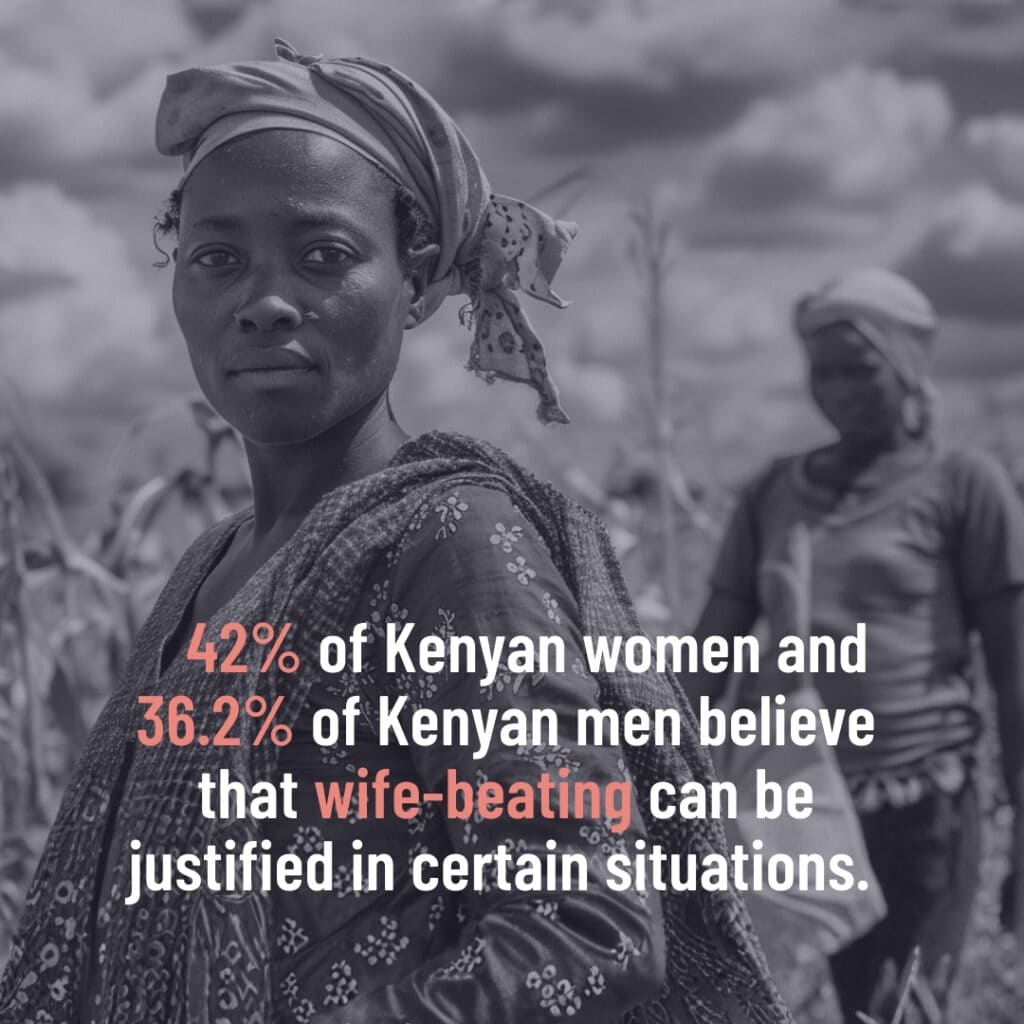
Women in Kenya face significant challenges, often stemming from deeply rooted patriarchal norms that lead to high levels of gender-based violence, economic inequality, and low political representation. Gender-based violence and femicide are huge crises in Kenya, with an estimated 34% of women having faced physical violence in their lifetime and 13% experiencing sexual violence. One survey revealed that 42% of Kenyan women and 36.2% of Kenyan men believe that wife-beating can be justified in certain situations.
Additionally, harmful practices such as female genital mutilation, child marriage, and forced “wife inheritance,” in which widows are forced to sleep with a male relative of their deceased husband to be considered “cleansed,” still persist in some nations.
Kenya also faces significant poverty, leading many Kenyan women to seek abortions due to their inability to financially support a child. A 2018 study showed that economic hardship was one of the leading reasons why women in Kenya sought abortion, even in clandestine and unsanitary conditions. Lack of healthcare resources is also a huge crisis in Kenya, with clinics often being inconsistent in care, significant gaps in diagnosis, lack of proper treatment, and access to essential medications undermining maternal health outcomes. In a culture that devalues women and lacks fundamental resources to care for both her and her children, women resort to whatever means necessary to survive. One woman, Dena Kadzo (pseudonym), recalls her abortion that she received whilst still a teenager, after her boyfriend refused to support her:
“I never used anything from the hospital, I used the traditional method, and I made a concoction of soda and local herbs. When I drank it, it caused bleeding, after a while some discharge came out but not everything came out, I had to go to the hospital. Hospitals scare me. If you want to abort, they might insert equipment that won’t clean you well. You might end up having discharge that smells bad, unlike when we use our concoctions, I never experienced that. When you take the medicine, it takes like 5 to 6 hours until they start working, it is very painful, and it hurts.”
Imagine being a young woman in Kenya, with no support, hiding both the mental and physical pain of her abortion from everyone. Unfortunately, this is a reality that thousands of Kenyan women face. The fact that these dilemmas exist in the world at all is a call to action to support organizations that do combat them, both nationally and globally.
Abortion Around the World: South America
1. Argentina
Abortion was legalized in Argentina in December 2020 through the law commonly called the “Voluntary Interruption of Pregnancy” law, which allows abortion up to 14 weeks of pregnancy. After 14 weeks, abortion remains restricted except in cases where there is a risk to the woman’s life or health and fetal abnormalities. Despite its legalization, data on abortion in Argentina is lacking due to underreporting based on social stigma and regional disparities. Illegal/underground abortions still occur, despite legalization, falsifying the claim that the legalization of abortion leads to less “unsafe” abortions.
2. Colombia
In 2022, the Colombian court passed of the most extreme abortion laws in the world by expanding abortion access up to 24 weeks gestation without the woman needing to give a reason, under certain protections. This ruling was likely in response to the large percentage (40%-50%) of abortions being performed outside regulated medical care while laws were more restrictive in Latin America. Due to social stigma and misinformation, clandestine abortions remain a significant crisis in Colombia despite legalization, once again exhibiting that permissive abortion laws do not help women; real support, social services, and options for life do.
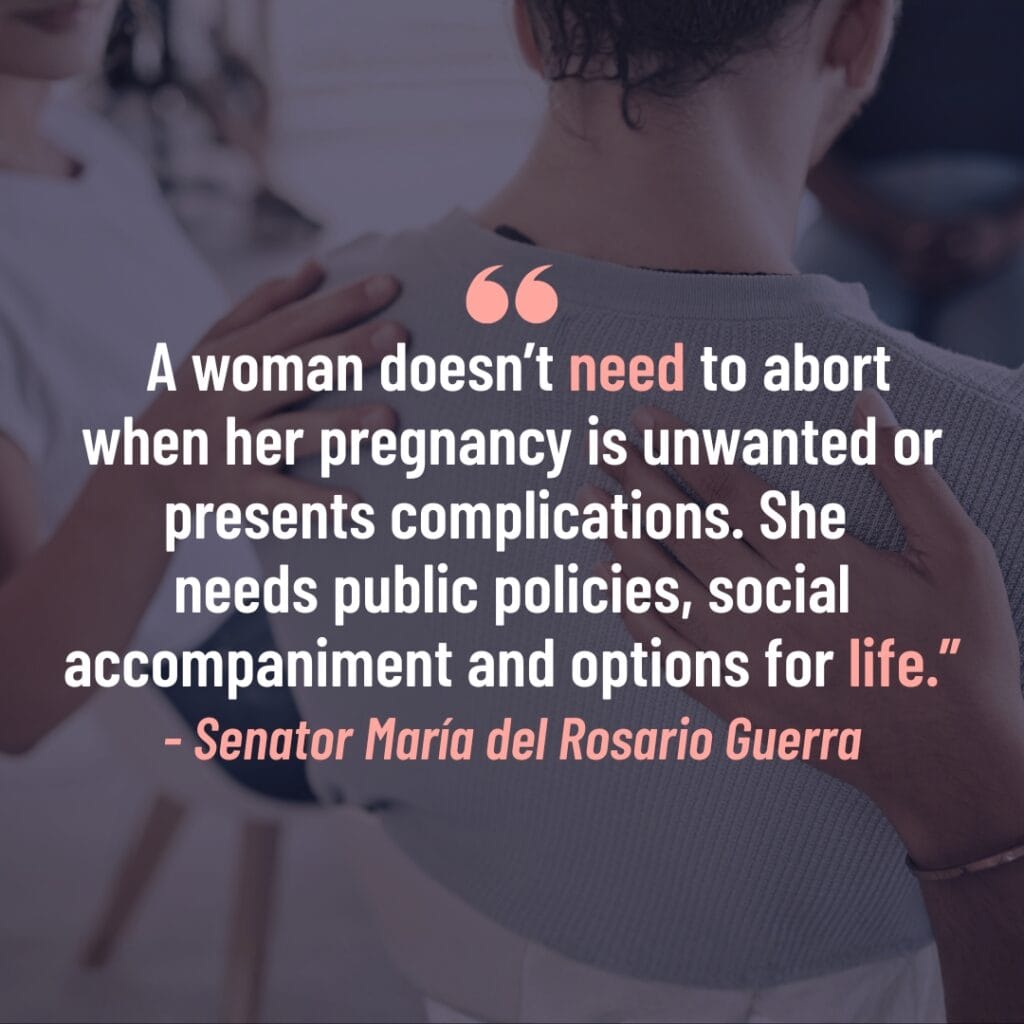
Despite expanded abortion access, Colombia still encompasses a large pro-life presence, many of whom reject the recent expansion. Many political big names, for example, spoke against the ruling back in 2022, including Senator María del Rosario Guerra, who tweeted, “A woman doesn’t need to abort when her pregnancy is unwanted or presents complications. She needs public policies, social accompaniment and options for life, not the offer of abortion as the first and only way out.”
Additionally, in 2022, nearly 500,000 people marched across the country in response to Colombia’s abortion expansion. The “United for Life” group explained that many Colombians feel that the abortion access expansion goes against Article 11 of their constitution, which when translated to English reads, “The right to life is inviolate. There shall be no death penalty.” This is strikingly similar to a portion of the U.S. Declaration of Independence, which reads “We hold these truths to be self-evident, that all men are created equal, that they are endowed by their Creator with certain unalienable Rights, that among these are Life, Liberty and the pursuit of Happiness.”
3. Brazil
Brazil is the largest country in South America by population, with over 200 million people. Given its size and diversity, access to healthcare and social services often varies widely across the nation, with people in rural or poorer regions often facing difficulties in getting quality care. Maternal health outcomes vary, often being worse in disadvantaged areas. This reflects broader issues: inequality, uneven access to care, poverty, and regional disparities. Public health issues such as lack of access to safe childbirth services and maternal support remain major challenges, especially for poor and marginalized women.
While abortion is generally illegal in Brazil, with few exceptions like women’s health at risk, rape, and fetal abnormalities, an estimated one to four million abortions take place annually. The country’s public health system (SUS) reports that around 250,000 women are treated in emergency rooms annually for complications from clandestine abortions. Today, unsafe abortion is Brazil’s fourth leading cause of maternal death, following hypertension, hemorrhage, and postpartum infections. Much like Colombia, this is a humbling reality and call to action. We must pray and take action to create a society that supports women and their children so that abortion become unthinkable. Brazilian women deserve better than abortion.
Abortion Around the World: Oceania
1. Australia
Australia is another one of eight countries that has no federal gestational limit for abortion. Abortion is legal throughout the entire country, leading to around 85,000 abortions occurring annually in Australia, equating to around 1 in 4 pregnancies ending in abortion, according to Amnesty International. Thankfully, there are Life-affirming organizations that fight to end abortion in Australia and provide women in unexpected pregnancies with resources and support. Right to Life Australia, for example, operates across multiple Australian states, campaigning for policy change and offering concrete help for pregnant women in the form of counseling, material aid, and referrals.
Abortion Around the World: Europe
1. United Kingdom
While regulations vary depending on location, abortion is legal everywhere in the UK. With this lack of complete protection for preborn children, the UK has recently seen record high numbers of abortion, including recent 2022 data that revealed almost 1 in 3 conceptions ended in abortion in England and Wales. A large percentage of these abortions were obtained through the dangerous abortion pill, which leaves countless women injured and victimized. Since the introduction of the pills-by-post scheme in 2020, over 54,000 women in England have been admitted to NHS hospitals for treatment of complications related to abortion pills. The UK is a stark demonstration of the dangerous effects of the abortion pill.
2. Ireland
Ireland is a tragic example of what happens when a culture of death is enabled in a country. Before 2019, abortion in Ireland was almost completely restricted. Older laws made it a crime to perform or help with an abortion, and the 1983 Eighth Amendment gave preborn babies the same constitutional rights as their mothers. Unfortunately, in 2018, a national referendum repealed the Eighth Amendment, and beginning in 2019, abortion was legalized up to 12 weeks, with limited exceptions beyond that. Since then, thousands of preborn children have been aborted, and the country has shifted from protecting life to normalizing its destruction. In fact, abortion stats released in 2022 revealed new heights for abortion rates in Ireland, with one abortion for every seven babies born.
Not surprisingly, before abortion’s legalization, Ireland maintained one of the lowest maternal mortality rates in the world. In 2017, for example, the mortality rate was a mere 5 deaths per 100,000 live births. Despite pro-choice propaganda, this statistic reveals that restrictive abortion laws do not endanger women’s lives. It is possible to protect both the mother and the child, which seems to be the majority consensus in Ireland despite abortion legalization. In fact, a 2018 referendum revealed that 66.4% of Irish voters to repeal the legalization of abortion, meaning over one-third of voters wanted to maintain strong protections for preborn children.
3. Malta
Malta is a small but mighty pro-life country in Europe that has outlawed abortion altogether. Their legal code values both the mother and child, stating that all citizens are entitled to “Life, liberty, security of the person, the enjoyment of property and the protection of the law.” The law also clarifies that, “The enjoyment of the said rights and freedoms by any individual does not prejudice the rights and freedoms of others or the public interest.” In other words, one person’s freedom cannot come through the detriment of another, which is the opposite mentality that abortion encompasses.
Notably, the maternal death rate in Malta is significantly low, with only 6 deaths per 100,000. In contrast, the United States, where elective abortion is largely permitted, has a death rate of 17.4 per 100,000 live births. This comparison undermines the claim that abortion access is essential in reducing maternal mortality. It is possible to care for both mother and child, and Malta is proof of that.
4. Iceland
Iceland is one of few European countries that allows abortions past 15 weeks. Abortion has had an especially devastating effect for those with Down syndrome in Iceland. With the rise of prenatal testing, nearly all preborn children diagnosed with Down syndrome have been aborted, which is a reality that Iceland has historically boasted about, claiming it has ‘eliminated’ Down syndrome.
One would hardly consider this healthcare; the same way one would never consider the mass genocide of Jews in Nazi Germany healthcare. Unfortunately, this is the reality of abortion: people viewed as less than are sacrificed in the name of someone else’s progress, and Icelandic preborn children with Down syndrome have unfortunately become victims of this sad reality.
Abortion Around The World: Asia
1. China
Globally, China has one of the highest number of abortions, with nearly 7 million occurring annually. In 2019 specifically, official records reported 9.76 million induced abortions in China. However, due to underreporting and the concealment of procedures performed in private hospitals and clinics, the true number is likely higher. This is likely a symptom of the infamous “One-Child Policy” implemented by the Chinese government in 1980.
After the Great Chinese Famine took the lives of more than 30 million rural Chinese people, government efforts to manage population growth took effect to avoid another. The “later, longer, fewer” policy was enacted, encouraging later marriages, longer spacing between births, and fewer children. While the fertility rates did decline because of this policy, the population growth was still seen as too high for China’s economic and resource planning goals. This set the stage for China’s One-Child Policy, which limited most urban families to one child and two for rural families if the first child was a girl. Failure to comply with this policy often resulted in fines, denial of the child’s legal registration, forced abortions and sterilization, denied access of healthcare, and more. Investigations and court records show forced abortions occurred even in the 7th–9th months of pregnancy during the policy.
The One-Child Policy was especially devastating for baby girls, to say the least. Aborting female babies specifically rose, as men are more valued in Chinese culture due to their ability to work the farms, become top earners, and carry on the family name. Demographers estimate China is missing 30–40 million girls due to sex-selective abortion, abandonment, and neglect. Throughout the early 2000’s, nearly 95% of children available for adoption from China were female.
The One-Child Policy ultimately left China far below the needed replacement rate for nearly three decades. Because of this dilemma, China ended the One-Child Policy on 2016, implemented the Three-Child Policy in 2021, then let families have as many children as they want. The One-Child Policy and sex-selective abortions have created a severe shortage of young women, leaving millions of men without potential spouses and placing heavy caregiving burdens on the remaining younger adults as the cost of living rises. While sex-selective abortion has since become illegal, China still has 30–40 million more men than women. Even with subsidies and extended maternal leave, China’s rapidly aging population and extreme gender imbalance remain among the most severe in Asia.
China’s One-Child Policy is still deeply rooted in the culture, leaving a lasting mark on families and preborn children across the nation. This devastation is a stark example of humans trying to take matters into their own hands with faulty thinking. As Proverbs 14:12 states, “There is a way that seems rights to a man, but its end is the way to death.”

2. India
India has another one of the highest abortion counts globally, with around 978,298 thousands happening annually. Under the Medical Termination of Pregnancy (MTP) Act, abortion is legal in India for up to 20 weeks with one doctor’s opinion, and up to 24 weeks in certain situations with two doctor’s opinions, i.e. rape survivors, minors, or fetal anomalies.
Like China, India has a strong sex-selective culture, valuing sons more than daughters. The reasons for this preference are somewhat economic, as sons inherit land, property, and wealth, in addition to supporting their parents financially in old age. Religion also plays a big part in this son-preferable culture. With majority of India practicing the Hindu faith, Hinduism includes religious rites only performed by sons, such as the Shraddha ceremony, which is believed as necessary to ensure the spiritual well-being of ancestors.
Because of these reasons and more, sex-selective abortions and neglect of daughters have led to skewed ratios in India, i.e. 899 girls per 1,000 boys in some regions according the Guttmacher Institute. One survey in 2022 even revealed that sex selection is normalized: about 40% of adults said it is “completely acceptable” or “somewhat acceptable” to get a “checkup using modern methods to balance the number of boys and girls in the family.”
There does remain some hope for India, however, as that same survey revealed that a slim majority of 55% of surveyed adults believe that abortion should be illegal in all or most cases.
Summary
Researching for this article has opened my eyes to the culture of death that exists all over the world. Abortion is not a U.S. exclusive epidemic rather, it is a worldwide crisis rooted in social, economic, and legal factors that victimizes women, men, and preborn children. In places of plenty and places of scarcity, abortion is viewed as a pressure-filled solution, leaving countless alone, scared, and empty. May we continue to pray, advocate, and fight for a world that enables women to choose life, meets them where they’re at, and provides resources to help them thrive.
Additional Resources to help women in unexpected pregnancies (in the U.S. and globally):
- LIFE International: Partners with local ministries in many nations to provide pregnancy counseling and practical help.
Heartbeat International: Offers a global network of pregnancy help centers with support, counseling, and referrals for moms worldwide.
- Option Line: A free hotline and online chat that connects women to nearby pregnancy help centers and services globally.
- Alliance Defending Freedom: Although focused on legal advocacy, ADF has global initiatives to protect life and supports local pro-life efforts internationally.